
€
Calisthenics
Outdoor bodyweight training sessions focused on strength, mobility, and endurance, held in the open air in Alcalá.
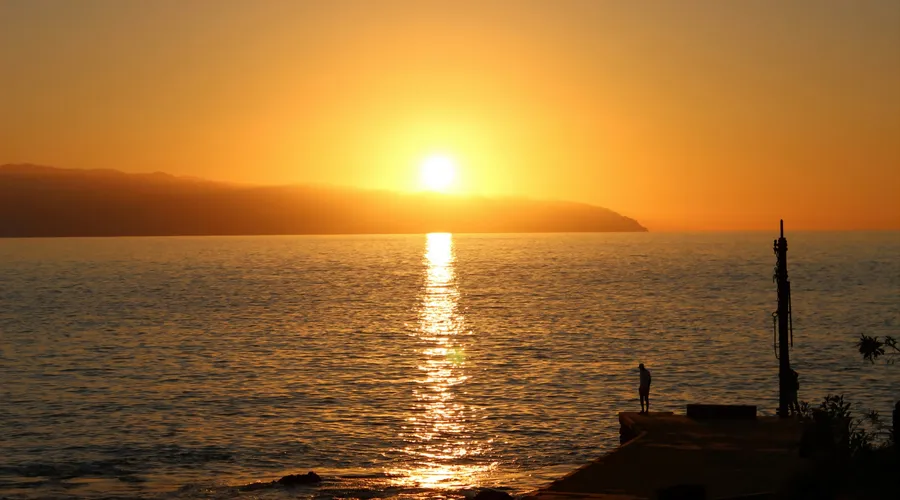
Los Gigantes faces due west, so every clear evening ends with the sun dropping into the Atlantic, usually with La Gomera sitting on the horizon. You don’t need to book anything or drive anywhere special, but where you stand changes what you see.
Times shift by almost three hours across the year. Rough guide for the middle of each month:
| Month | Sunset | Where it goes down |
|---|---|---|
| Dec–Jan | 18:15–18:30 | Behind La Gomera |
| Feb–Mar | 19:00–19:15 | Northern tip of La Gomera |
| Apr–May | 20:30–20:50 | Open sea, right of La Gomera |
| Jun–Jul | about 21:05 | Open sea, well right of La Gomera |
| Aug–Sep | 20:15–20:45 | Open sea |
| Oct | 18:30–19:40 | Northern tip of La Gomera |
| Nov | about 18:15 | Behind La Gomera |
From November to February the sun disappears behind La Gomera’s mountains a few minutes before the official sunset time, so don’t cut it fine. The big jump in late October (and late March) is the clocks changing.
The roadside lookout on the TF-454 between Los Gigantes and Puerto de Santiago. It looks straight along the cliff wall with the town and marina below: the classic postcard view. There’s a small café and free roadside parking, but it’s limited and fills up before sunset in high season, so get there early or be ready to try somewhere else.
The black-sand beach at the foot of the cliffs. The sun itself sets out to sea on your left, but the real show is to your right: the cliffs face west, so they catch the last light and turn orange-red for ten minutes or so. Sit on the sand, or get a table at one of the bars around the marina and watch with a drink.
At the end of the road that climbs north above Playa de Los Guios, right where the cliffs begin. The road is closed off with a chain, but you can step over it and watch from where the path starts. It’s less of a built lookout than Archipenque and more natural, with views over the marina, out to La Gomera, and along the cliffs as they catch the last light. Free, and walkable from the marina.
The bigger black-sand beach a 10-minute drive (or 30-minute walk) south. It’s more open, with a clear sea horizon and La Gomera straight ahead, and there’s a promenade with bars and restaurants right behind it. The easiest option if you want sunset followed by dinner without moving the car.
On weekend evenings the Oasis pool complex above the marina runs “Oasis Sunset” from 6pm to 10pm. It’s €10 including a welcome drink, with music and the cliffs in front of you. See A Pool Day at Oasis for details.
High up on the TF-436 road between Santiago del Teide and Masca, about 25 minutes’ drive. You’re looking down over the whole coast, Los Gigantes included, with La Gomera beyond. On some evenings you’re above a layer of cloud with the sun going down into it. It’s noticeably colder up there, so bring a jumper. Parking is limited, and the drive back down is narrow and twisty in the dark, so only go if you’re comfortable with mountain roads.
Paying extra for a boat trip purely for the sunset. The boats are worth it for whale and dolphin watching, but the sun goes down over the same horizon you get for free from the beach.
Tagged:
Outdoor bodyweight training sessions focused on strength, mobility, and endurance, held in the open air in Alcalá.
Learn to dance and make some new friends with our beginner friendly group classes, no partner needed!
The reopened Oasis pool complex above the marina, with cliff-view pools, sun loungers, food trucks and cocktails. Day passes bookable online.

